There’s a particular frustration that digital-first publishers know well. You’ve invested years building an app – refining the user experience, integrating your CMS, tuning the analytics, growing the audience. Then you need to add digital edition functionality, and the only options on the table require you to adopt an entirely new platform, or a second app.
AI Has Changed the Equation
A few years ago, building and maintaining a native app required a large, specialist team. The cost and complexity of doing it in-house pushed many publishers towards all-in-one platforms – not because they wanted to give up control, but because the alternative was simply too resource-intensive.
AI has shifted that. Publishers are using AI-assisted development tools to accelerate how they build, test, and iterate on their own apps. Tasks that once required weeks of developer time – UI prototyping, automated testing, content tagging, localisation – can now be done faster and with smaller teams. The barrier to owning your own app infrastructure has dropped significantly.
But AI hasn’t changed everything. It can speed up general development, but it can’t replace the specialist engineering behind high-fidelity edition rendering, offline content delivery, or the nuanced caching logic that makes a digital replica feel seamless on a mobile device. These are deeply technical problems that require years of domain expertise – not a quick AI prompt. This is exactly where an SDK earns its place: it gives publishers the specialist tools that genuinely need expert engineering, while leaving them free to build everything else on their own terms.
The Platform Trade-off
Most app platforms in the publishing space operate on a simple premise: you use their system, end to end. They provide the app shell, the content management layer, the distribution pipeline, and the reading experience. In return, you get a polished product and a managed service. This is how our own Native app platform works.
And, for publishers without in-house development teams, that strategy still makes complete sense. But for those who’ve already built their own native apps, especially those now accelerating development with AI, adopting a full platform means giving up control they’ve spent years earning. It means migrating reader data, retraining editorial teams, and accepting someone else’s roadmap priorities over your own.
What an Edition SDK Actually Does
An SDK (software development kit) is a set of tools and components that plug into an existing app. In the context of publishing, our edition SDK provides the technology for rendering digital editions: page-faithful layouts, offline reading, smooth navigation, and the visual fidelity that readers of print-origin content expect.
Crucially, the SDK doesn’t replace anything. It sits inside the publisher’s own app, alongside whatever else they’ve built. The app remains theirs – their branding, their analytics, their release schedule, their App Store relationship. You own the code. You control your own roadmap. The SDK simply adds a capability that would be costly and complex to build from scratch – even with AI in the toolkit.
For development teams, the integration is designed to be lightweight. The SDK handles edition rendering, caching, and content delivery. The publisher’s app handles everything else. The two coexist without architectural conflict.
Who Benefits Most
The SDK model is particularly well-suited to publishers with in-house development teams who want to maintain architectural control. Media companies running apps that combine news feeds, video, podcasts, and editions benefit from being able to add edition technology without rearchitecting everything else. And publishers who’ve been through a platform migration before tend to value the independence that an SDK provides.
It’s also increasingly attractive to publishers who are investing in AI-driven development workflows. If you’re building faster than ever, the last thing you want is a platform bottleneck dictating what you can ship and when. An SDK slots into your process, not the other way around.
And for organisations with strict data governance requirements, the model offers a clear advantage. Because the SDK operates within the publisher’s own app environment, reader data stays within their existing infrastructure. There’s no additional third-party data layer to navigate, no new privacy policies to reconcile, and no ambiguity about who owns the reader relationship.
Control Without Complexity
At PageSuite, we understand what AI can and can’t replace. We’ve focused our edition SDK on the specialist tools that genuinely need expert engineering so publishers can direct their own development resources, augmented by AI or otherwise, towards everything else.
You own the code. You control your own roadmap. We just make sure the edition technology inside your app is world-class.
If you’ve built something worth keeping, you shouldn’t have to give it up to add what’s missing.
We already work with The LA Times, The Philadelphia Inquirer, The Seattle Times, Sydney Morning Herald, The Australian, and The Times who all follow this approach.
Ready to explore what PageSuite can do for you and how we work with other publishers in this way? Book a demo with our team.
Company News
Newsday Leads the Way with Mobile-First Video
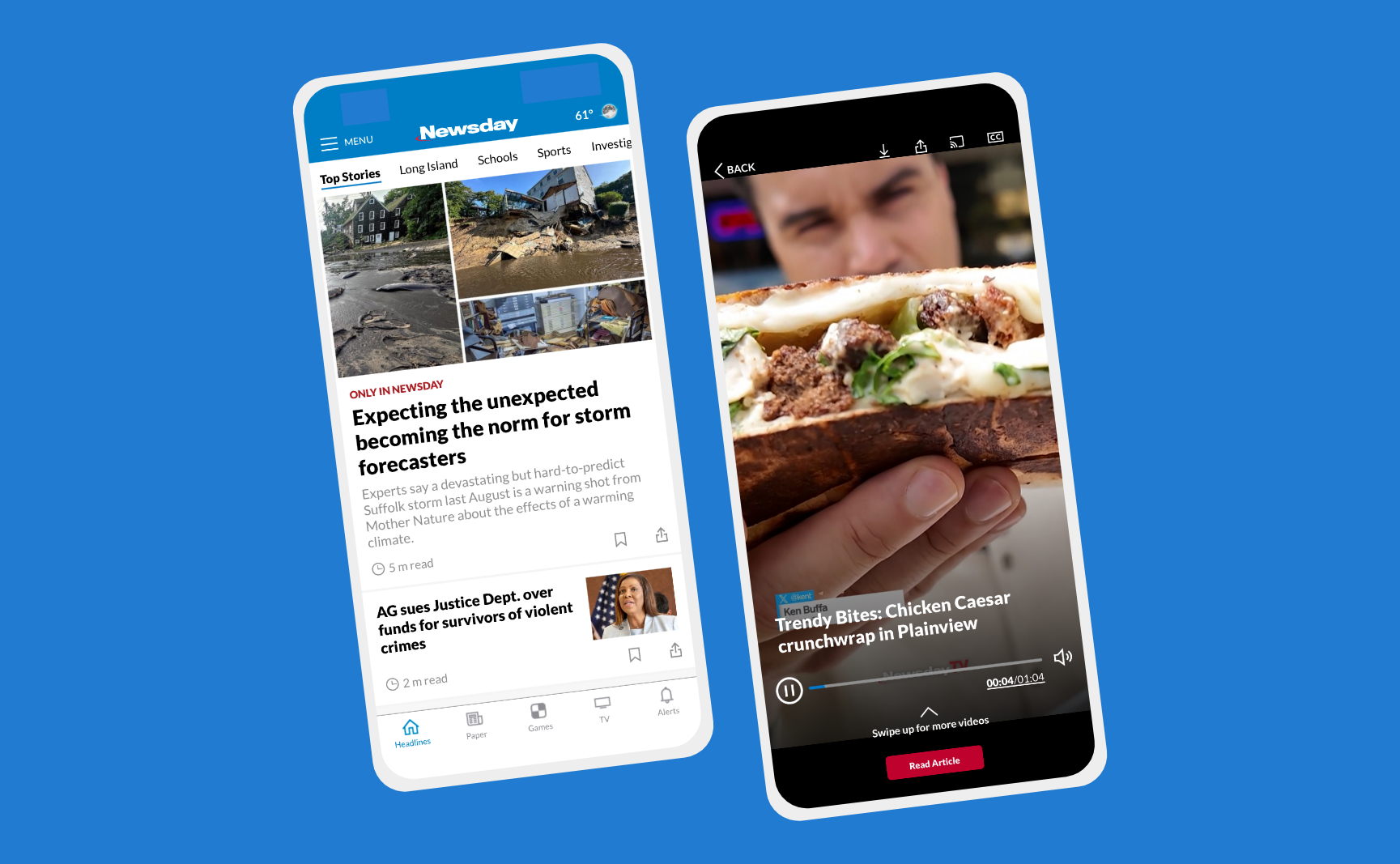
Newsday has launched a redesigned mobile app that prioritises vertical video...

Industry Insights
Our takeaways from this year’s Digital News Report
Now we’ve had a chance to read, watch (significantly!) and digest the report we wanted to highlight our top 3 takeaways…
Company News
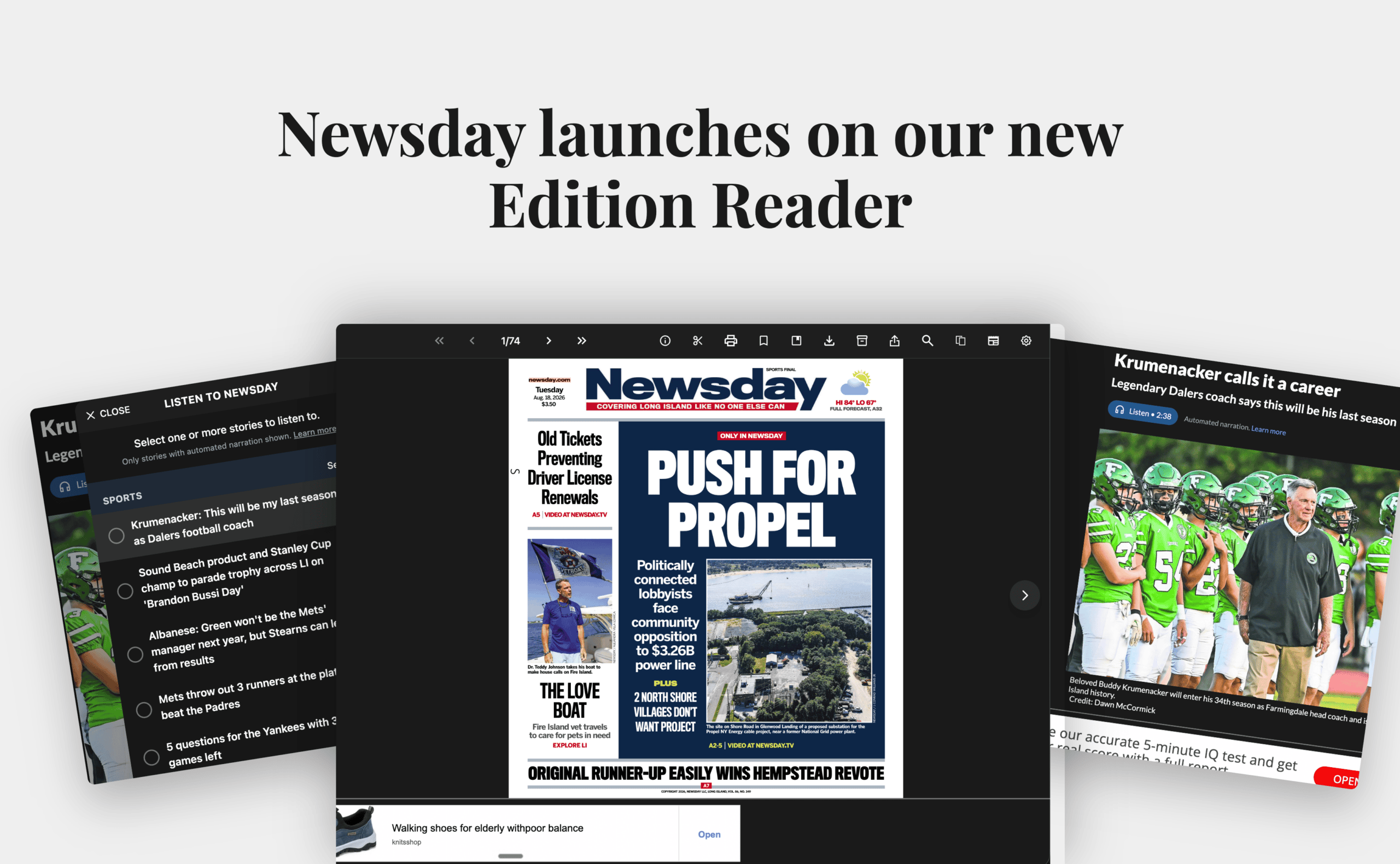
Newsday launches on PageSuite’s next-generation eEdition web reader
Long Island’s largest news publisher has migrated to our latest web reader - built for listening, watching and reading. The move brings a completely refreshed interface with a selection of new features...