The Reuters Institute’s Digital News Report 2026 is the most comprehensive annual snapshot of how the world consumes news, surveying audiences across 48 markets, from North America and Australia to the UK, DACH and Scandinavia. We’ve taken a bit of time to digest the data, review how the results align with our vision and now we’re ready to let you know how we’re responding.
What the Report Tells Us About the State of the Industry
The headline finding is one publishers have been bracing for: social media and video networks have, for the first time globally, overtaken news organisations’ own websites and apps as the most widely used way to access news online. 54% of people across 48 markets now get their news primarily from third-party platforms. Publisher sites and apps have fallen 12% since 2020. Add AI chatbots into the mix, and the combined share of intermediated, platform-controlled consumption reaches 56%.
The regional picture is telling. In Australia and New Zealand – markets central to our publisher base – the shift to social and video is well advanced. Across North America, search traffic to publisher sites fell 38% between November 2024 and November 2025, with publishers expecting it to almost halve over the next three years. In the UK, just 4% of people use AI chatbots for news, the lowest of any market, yet the overall decline in direct publisher traffic is consistent with global trends. In the DACH markets, TV and news websites still hold relatively stronger, but the trajectory is the same. In the Nordics, subscription maturity is highest, Norway at 40% paying for news, Sweden at 32%, showing what’s possible when publishers invest in the direct relationship over years.
The constant across all markets: audiences who trust a specific news brand remain loyal to it. “Trust for many established news providers appears to be defying this trend,” the report notes, even as trust in news overall has fallen to its lowest level since 2015 at 37%.
We’ve taken the five biggest challenges surfaced by this report and mapped them directly to our product roadmap. Here’s where we stand on each.
1. Bring AI Inside the Trusted Brand
The data: AI chatbot use for news has risen to 10% globally, with usage as high as 14% in South Korea and doubling year-on-year in Greece and Spain. The most popular feature is the ability to ask follow-up questions (42%), with summarisation and “make it easier to understand” close behind. But trust in AI news answers sits at just 20% globally and only 42% of AI chatbot news users even click through to the original source. Publishers are losing both the reader relationship and the attribution.
What this means: the behaviour – summarise, explain, ask – is not going away. The question is whether it happens inside your brand or inside an AI chat.
What we’re doing: AI summaries are coming in our next mobile app release. The approach is grounded in the publisher’s own verified content, so readers get the summarise-and-explain experience inside the trusted masthead, not on a third-party platform. This matters enormously for attribution, for trust, and for keeping the direct relationship intact. We’re not building generic AI; we’re building an AI layer that belongs to the publisher.
2. Native Video and Audio – Bring Platform Formats Home
The data: 77% of people globally now consume online news video each week. In 45 of 48 markets, more people watch online news video than broadcast TV news. But video consumption on publishers’ own websites and apps fell 5% last year – down 10% since 2021. Growth in video is happening almost entirely on YouTube, Instagram, and TikTok. As the report states plainly: “Capitalising on growing audience enthusiasm for online video content in a way which seems to have passed publishers by.”
The regional picture sharpens this. In Australia, the US, and Canada – where YouTube popularity is highest – publishers are effectively seeding their most engaging content into a platform that captures all the monetisation. Across Europe, the same trend is accelerating among under-45s.
What we’re doing: PageSuite already supports native video and audio inside our mobile app, and our most recent web reader release now supports this inside the eEdition too. Publishers don’t need to choose between owning the reader and delivering video – that capability exists today. Article-to-audio and embedded short-form video mean your readers stay in your environment for the full range of content formats the report shows they want. We’ll continue to develop these features in line with how video and audio consumption behaviours evolve.
3. Calm, Finite Formats – the eEdition’s Natural Advantage
The data: 42% of people globally say they sometimes or often avoid the news, up from 29% when the question was first asked in 2017. In Bulgaria, Croatia, Greece, and Turkey, that figure exceeds 60%. In the UK, it’s 50%. The drivers are well-documented: a sense of overwhelm, negativity, and the relentlessness of the algorithmic feed.
Yet ‘news lovers’ – the most engaged, most likely-to-pay segment – remain “relatively undiminished in their usage, engagement, and propensity to pay.”
The eEdition is structurally the antidote to everything driving avoidance. It is finite. It is editor-curated. It has a beginning and an end. It is the opposite of the never-ending scroll.
What we’re doing: Our Feed Edition solution already allows publishers to create morning briefing-style editions, evening editions, and topic-specific editions that break the news into formats readers can actually control. Publishers can give readers a curated, manageable daily package rather than a never-ending feed of content. This is a positioning opportunity as much as a product one and one we’re encouraging our publisher partners to lean into actively. The replica edition isn’t legacy; it’s calm in a chaotic landscape.
4. Flexible Access Models – Meet Readers Where They Are
The data: the percentage paying for online news is flat at 17% across tracked markets, a ceiling the report acknowledges is stubbornly real for most countries. But the picture is quite uneven. Norway stands at 40%, Ireland at 22% (up 10% since 2020), Australia at 20%. In the UK, only 9% pay, and 65% say nothing would make them pay. Hard paywalls in paywall-resistant markets are a growth ceiling, not a growth strategy.
The publishers growing revenue are doing it through pricing, product mix, and flexibility, not volume. USA Today saw subscribers fall 30% in 2025 while ARPU grew 27%, by shedding low-value customers and improving the product. The New York Times now generates the majority of its subscriber revenue from bundles that include games and cooking alongside news.
What we’re doing: PageSuite supports a range of access and paywall models today, including metered access, and we’re always in conversation with our publisher partners about what else they need. We believe no single model fits every market or every publisher, and our goal is to make it as easy as possible for publishers to test, iterate, and adapt their access model without that being a heavy technical lift. If you’re a publisher thinking about moving from a hard paywall to a hybrid model – or exploring day passes, gifting, or membership tiers – we want that conversation.
5. First-Party Data and the Two-Speed Audience
The data: direct publisher reach is down 12% since 2020. Under-35s are overwhelmingly on social and video – more than half of 18–24 year olds now cite social, video networks, and AI chatbots as their primary news source. And 56% of 18–24 year olds who didn’t read a newspaper last week have never read one regularly. There is no latent print habit waiting to reassert itself.
At the same time, the 45+ audience still anchors direct publisher consumption. TV and newspaper habits are durable at this end of the demographic. Publishers are managing two audiences with genuinely different product needs.
What we’re doing: The logged-in reader experience is where the entire strategy converges. Smart notifications, personalised briefings, offline reading, streak-based loyalty mechanics – these are the tools that convert occasional visitors into habitual readers, and habitual readers into subscribers. First-party data from a logged-in app audience is the remaining defensible moat as search and social referrals continue to erode. For younger readers, that means a mobile-first, ‘snackable’, vertically-oriented onboarding experience. For the loyal core, it means a polished, reliable eEdition that has earned its place on their morning routine. We’re building for both – because publishers need both.
To Summarise…
This year’s Reuters Digital News Report is a challenging one. The trends it captures – platformisation, AI disruption, news avoidance, the erosion of direct reach – are real and accelerating. But the signal within that noise is consistent: publishers who own the direct relationship with their readers, who invest in branded digital products that readers choose to open, and who treat engagement depth as more important than reach breadth, are the ones seeing sustainable revenue growth.
Every product initiative above is about the same thing: making the eEdition and app the place where that relationship lives – absorbing the behaviours that are otherwise leaking to platforms, and giving readers compelling reasons to come back directly every day.
If you’d like to talk about how your product strategy maps against what this report is telling us, we’d love to hear from you – just email hello@pagesuite.com
Source: https://reutersinstitute.politics.ox.ac.uk/digital-news-report/2026

Industry Insights
How the Latest World Press Trends Report Highlights New Opportunities – and Where PageSuite Fits In
Publishers around the world are navigating a rapidly evolving media landscape, and the latest World Press Trends Outlook report from WAN-IFRA paints a compelling picture of both challenge and opportunity
Upcoming Events
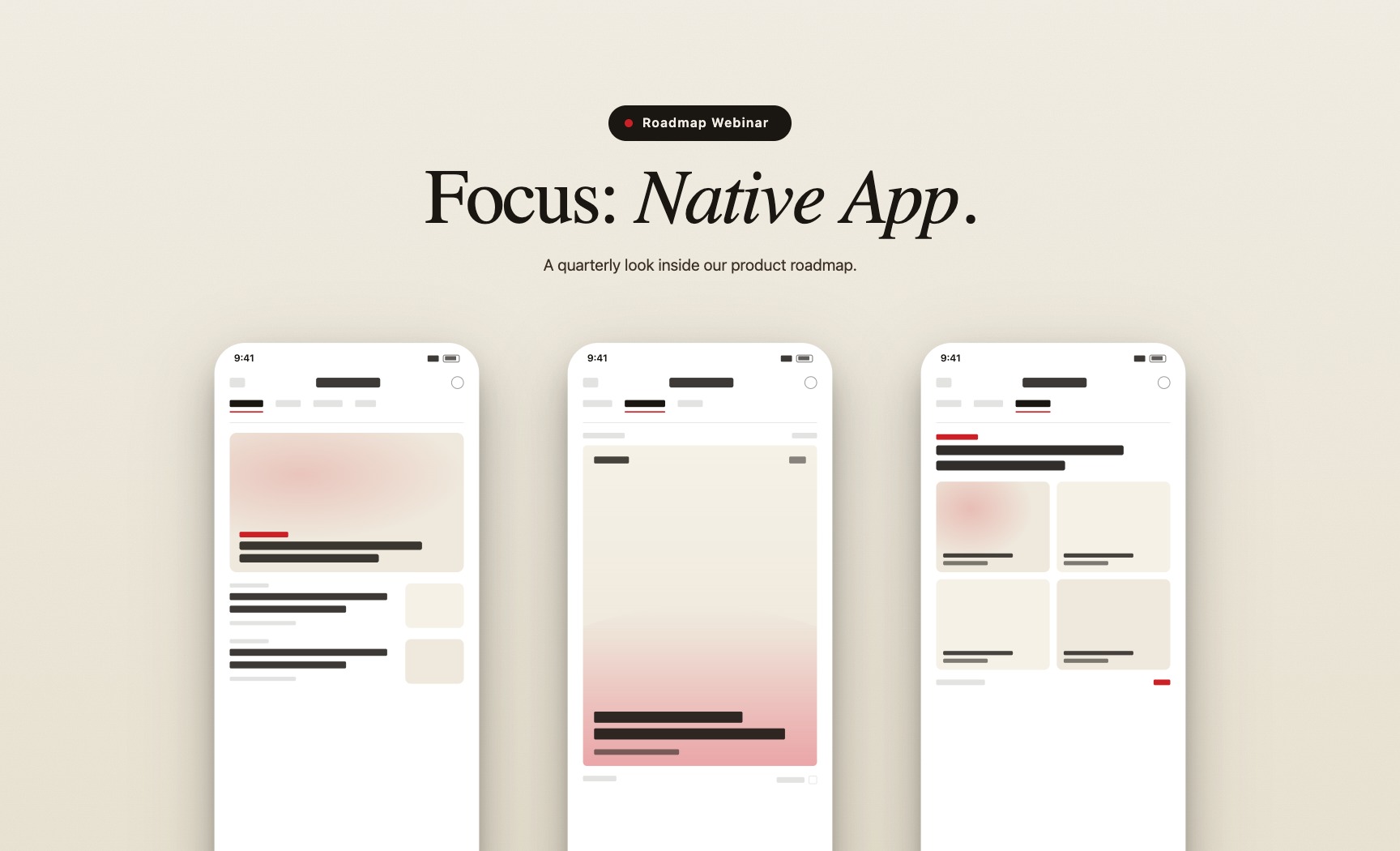
Roadmap Webinar: Native App – What Next?
We're launching a new quarterly webinar series to keep our clients connected to the latest product developments across the PageSuite platform — and we'd love you to join us for the first session.

Upcoming Events
PageSuite is Heading to Austin for the 2026 Mega-Conference!
We are thrilled to announce that PageSuite will be joining industry leaders in Austin, Texas, for the 2026 America’s Newspapers Mega-Conference from March 30th to April 1st.